
JLYPT Manufacturing Case Notes
Small bore.
Deep machining challenge.
The small opening is the defining feature of this alloy steel project. The manufacturing questions extend well beyond the visible end face.
Discuss a Deep-Hole Part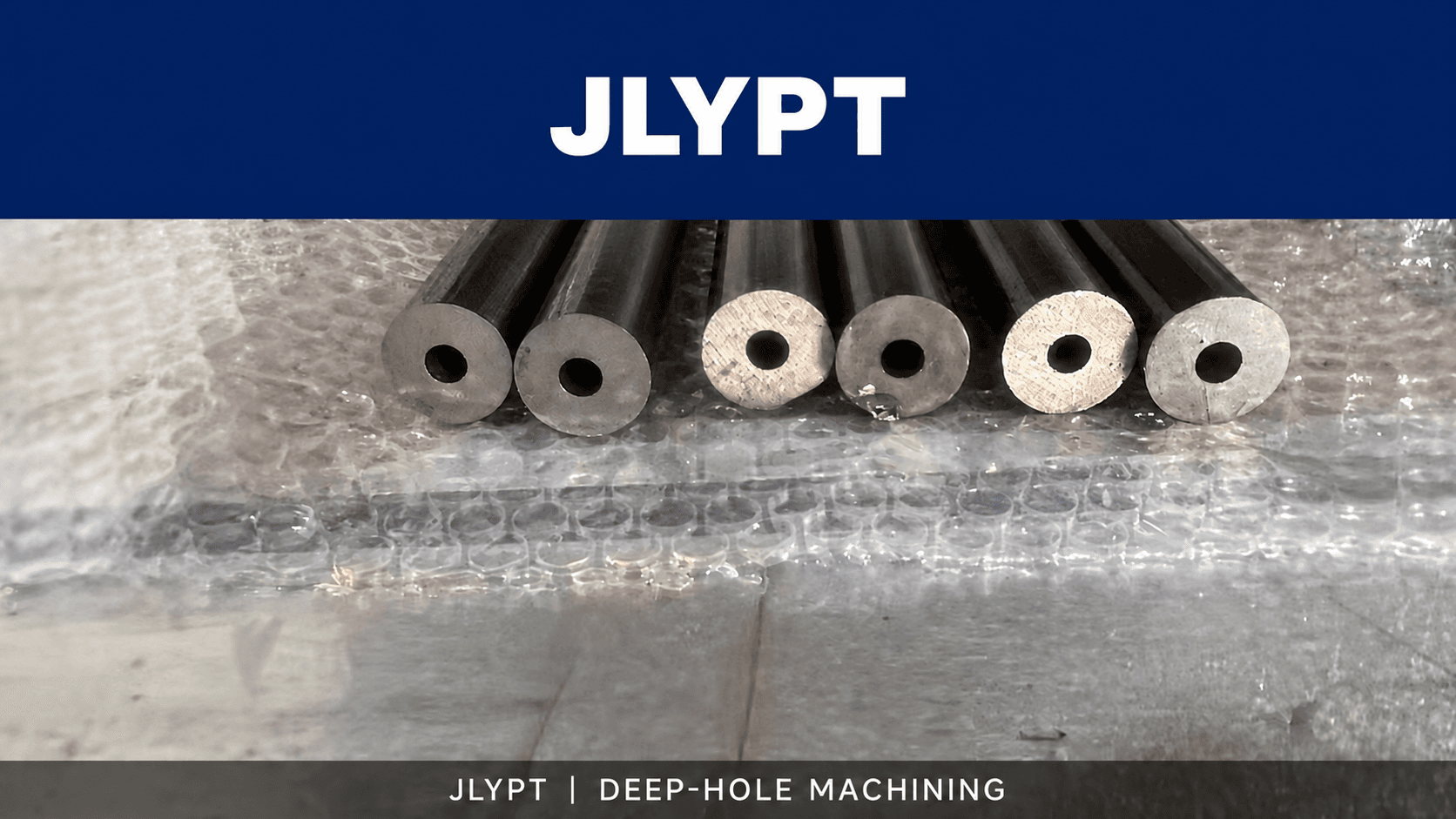
The small bore is the key feature
This JLYPT case concerns an alloy steel component with a small bore extending along its length. The outside can appear straightforward, but the engineering challenge lies inside: bore size, internal surface requirements and verification must be considered together. The visible opening introduces the feature; it cannot establish the condition of the entire bore.
Consistency along a long bore
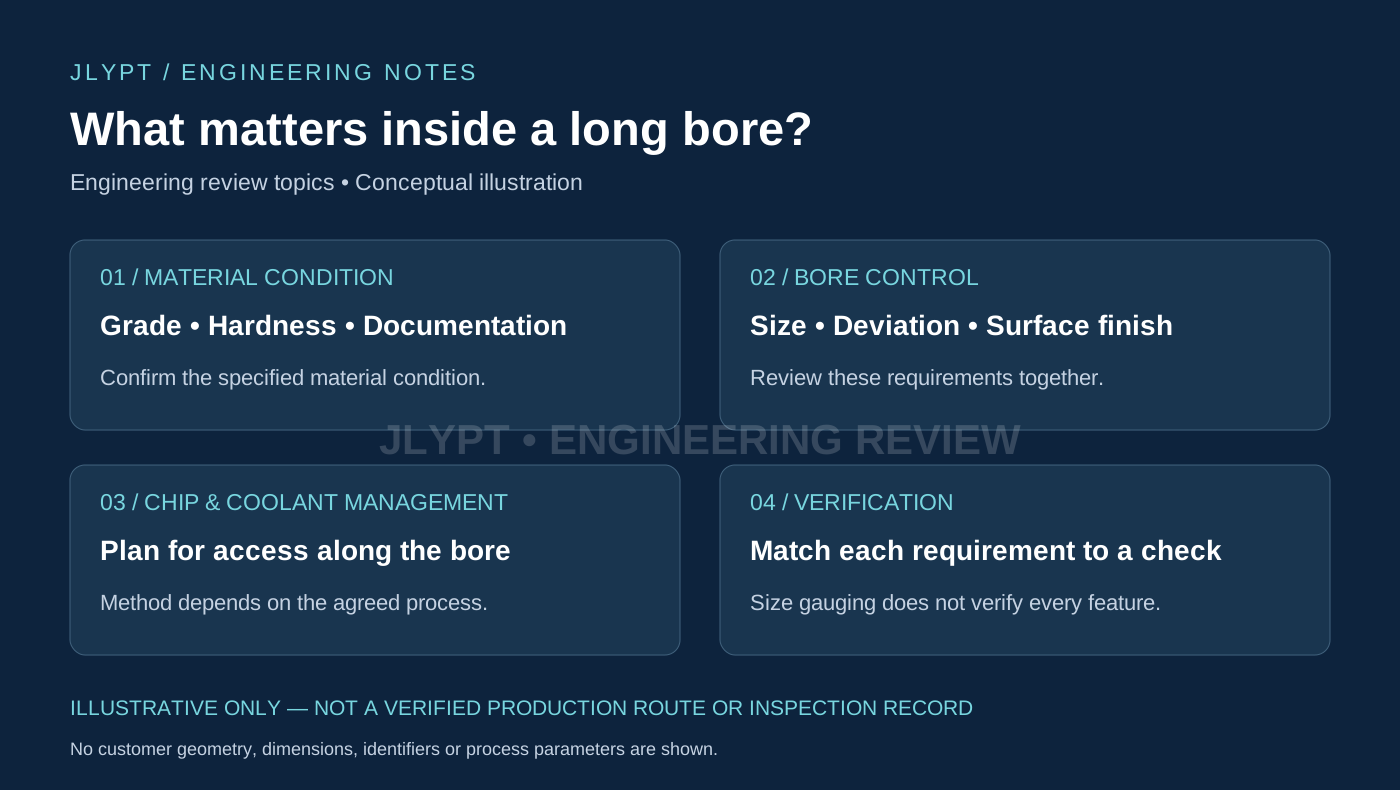
As bore depth increases relative to diameter, the manufacturing review must consider tool guidance, chip evacuation, coolant delivery and bore deviation. For this project, the drawing combined a defined finished bore size with internal surface and material-condition requirements. These are connected requirements, rather than independent items to resolve at the end of production.
Material condition matters
The drawing specified alloy steel with hardness and minimum yield-strength requirements. A material designation alone does not describe every condition relevant to machining or acceptance. For a similar enquiry, the review should establish the selected grade, supplied condition and required material documentation before agreeing a production route.
Inspection needs to match the requirement
The drawing called for go/no-go inspection and included surface-finish and runout requirements. A size gauge checks the feature it is designed to assess; it does not, by itself, verify every surface or geometric requirement. Inspection planning should define what will be checked, how it will be checked and which records the customer requires.
What this case illustrates
Deep-hole machining is a manufacturing and verification challenge. Bore size, length, material condition, internal finish and inspection expectations all affect manufacturability. Discussing these together gives engineers and buyers a clearer basis for reviewing a drawing and requesting a quotation.
Watch the small-bore project overview
30 seconds · English on-screen text · Silent video · Small bore close-up
Have a small, deep bore to manufacture?
Share the material specification and condition, controlled drawing, critical bore requirements, quantity and inspection expectations. Request an NDA before sending confidential files if required. Our team can review manufacturability with you before quotation.